Spring til indhold.

Nyhed

Six good SoMe-tips for those going to "Folkemødet"

Lagt online: 11.03.2026

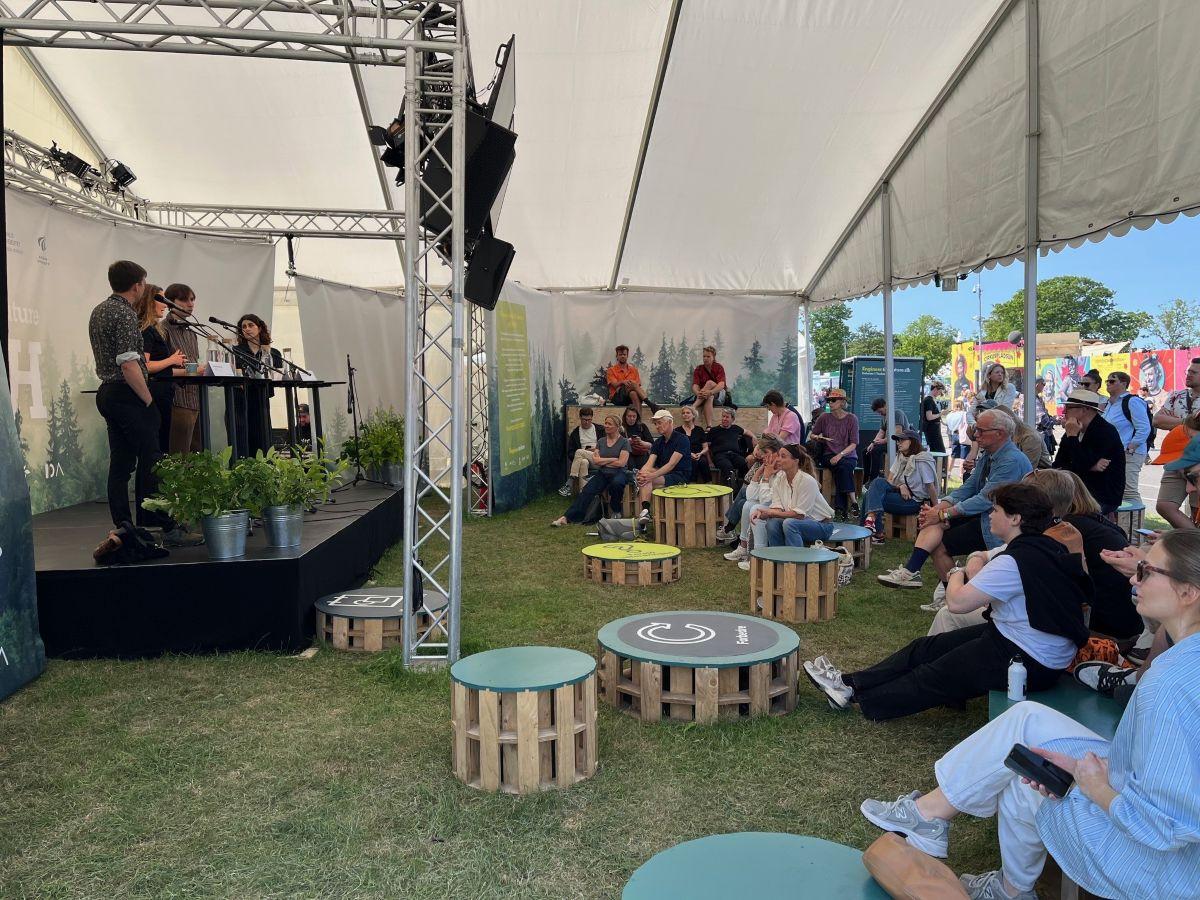
"Folkemødet" does not only take place in the tents, on stage and in the small courtyards in Allinge. The conversations are equally alive on social media both before, during and after the days on Bornholm.

Fotokredit: Camilla Kristensen, Folkemødet på Bornholm 2025

By Anna Husted Hjerrild Hansen, Acting Head of Social Media, AAU Communications and Public Affairs. Foto: Archive - Camilla Kristensen, Folkemødet at Bornholm 2025

If you as a researcher want to get the most out of your participation, you should therefore think of SoMe as a strategic supplement to your debates, presentations and meetings. This is where you can put your expertise to work, reach out to new collaborators and keep the conversation going long after the applause has settled down.

And one medium stands out in particular: LinkedIn. Figures from Overskrift.dk show that LinkedIn is by far the most important platform in connection with the Folkemødet when it comes to visibility, networking and professional positioning.

The 6 good SoMe-tips:

  1. 1

    Before: Get control of your online business card

    Before you share a post, it's a good idea to update your profile. LinkedIn is your digital business card, and people will be looking before and during “Folkemødet”.

    Focus on the most important:

    • Profile picture: Choose a professional photo that still feels true to who you are
    • Topbanner: Choose an academically relevant photo, which speaks into your research area (if it exists)
    • Title: Short and precise description of your role, combined with your researcharea/- competence as subject headings. For example, Associate Professor of Criminology at Aalborg University | illegal markets | cybercrime | drugs | (max 220 characters)
    • About-text: Short reader-friendly description of academic interests, key-skills and any acheivenemnts and contact information (max 2600 characters)

    Think: If an organization is looking for an expert for their debate or if a politician, journalist or director clicks on your profile after a debate, does it give a true picture of who you are and what you can do?
  2. 2

    Before: Build a strategic network

    You need to have someone to speak with.

    “Folkemødet” is all about relations – and they often start online. Make sure you are connected with:

    • Peers and colleagues
    • Collaborators
    • Relevant organizations
    • Decision makers in your field

    Consider: Who would you like to engage in dialogue with this year? Politicians? Industry organizations? NGOs?

    And remember: On LinkedIn, it's perfectly legitimate to connect with people you haven't met before – especially if you share professional interests. You can also send a message via LinkedIn if you'd like to meet someone for an informal coffee meeting.

  3. 3

    Before: Warm up and mark your professional competence

    You don't stand up for a debate without warming up. This also applies to LinkedIn.

    Before the “Folkemøde” you can:

    • Offer qualified input on academically relevant posts.
    • Offer your research-based perspective in your own posts
    • Share which debates you participate in and why

    When you have already positioned yourself professionally, it is easier for others to see what you contribute to when you stand on stage in Allinge.

  4. 4

    During: Use your camera

    LinkedIn is also a visual platform. A post with photo(s) are getting seen more than plain text.

    So remember to take photos:

    • Before the debate
    • Behind the scene
    • Together with your debates
    • Or of a concrete situation, which illustrates your point

    If the selfie-camera is not your cup of tea? Then ask the organiser or a colleague to take a photo. It does not need to be perfect.

  5. 5

    During: Quality beats quantity

    You do not need to document every panel.

    During and righht after ”Folkemødet” Linkedin is filled with content of the “sunshine island”. One sharp and thought out post beats five half-hearted.

    Ask yourself:

    • What was the most important insight?
    • What surprised me?
    • What should more people know?

    Share that and forget the rest.

  6. 6

    After: Drop the “I was there” – share useful knowledge

    Although it may feel that way, not all of Denmark was on Bornholm. That's why it makes sense to sum it up. But avoid the simple "thanks for a great trip" post. Instead, make a summary post with:

    • 3–5 concrete takeaways
    • Insights that can be used in practice
    • Points from both your own and other people's debates

    People follow you for your expertise – not for your presence. Give them something they can take with them.