Spring til indhold.

Nyhed

Five tips: Get the most out of the Democracy Festival “Folkemødet”

Lagt online: 28.01.2026

Get ready for this year's Democracy Festival on Bornholm. Here are five tips on how researchers can plan their trip to the “Sunshine Island” so that they actually end up with more than laundry and worn-out shoes in their suitcase home.

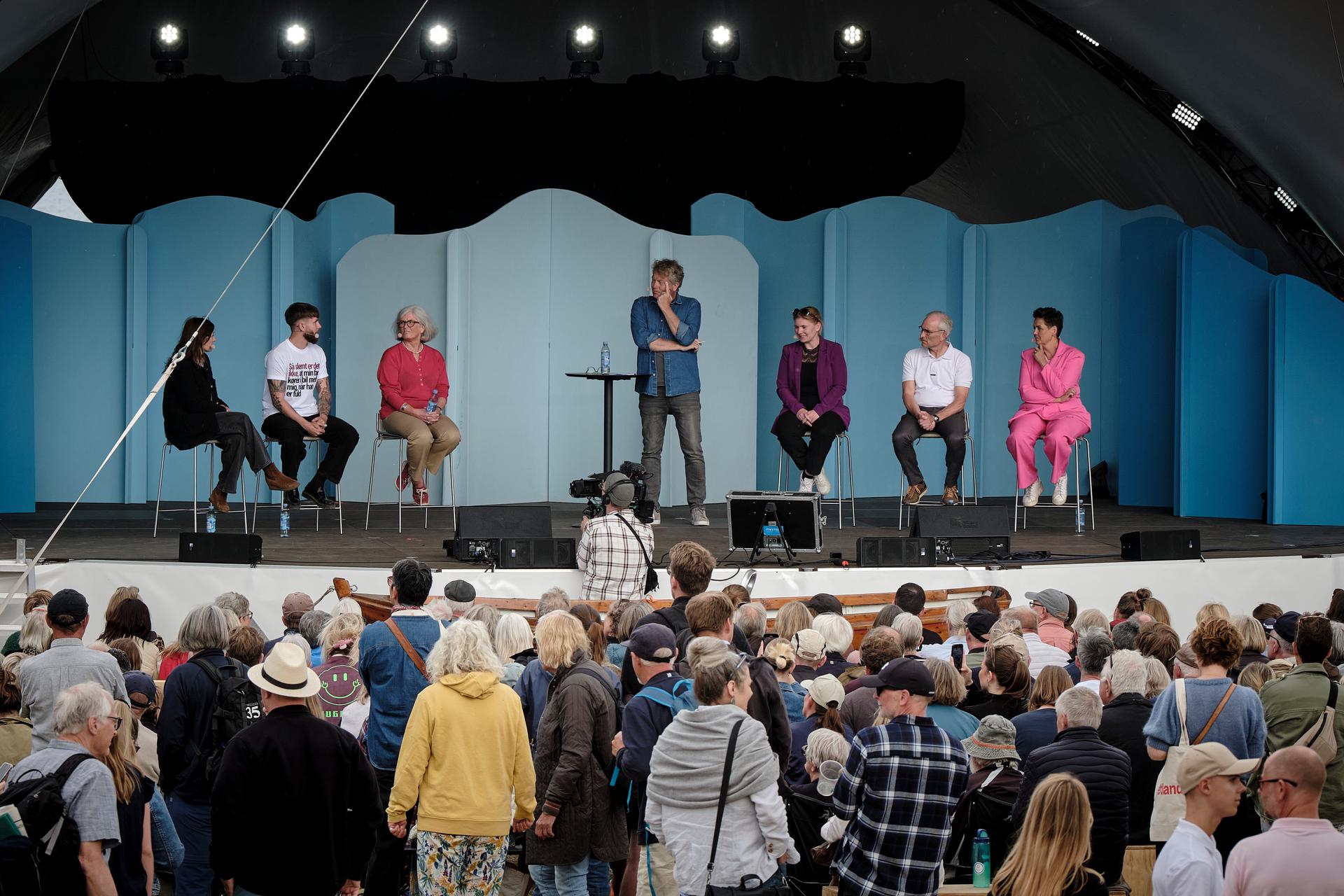
Fotokredit: Pelle Rink, Folkemødet på Bornholm 2025

By Jeannette Byløv, Strategic Advisor, AAU Communication and Public Affairs
Foto: Archive - Pelle Rink, Folkemødet at Bornholm 2025

As a researcher at Aalborg University, you have a unique opportunity to present your research, discuss socially relevant issues and create new networks at the Democracy Festival “Folkemødet” on Bornholm.

In Allinge, you will have direct access to decision-makers, collaboration partners and the general public with an interest in your research area. It’s a chance to make your research relevant in a societal context, perhaps get media attention and establish collaborations that can lead to both new projects for you and greater visibility for Aalborg University.

Maybe you think June is a long way off? But to get the most out of participating in the festival, you need to plan your presence in a strategic and targeted way. And that work should start now.

The earlier you plan your participation, the better you can ensure that your activities reach the right audiences and create maximum impact.

Karen Worm Markussen is the head of Policy and Missions in AAU Communication and Public Affairs. Throughout her career, she has advised on and participated in a number of democracy festivals on Bornholm. She offers her advice on how you can plan your participation and get more 'value' for your efforts.

The 5 Tips:

  1. 1

    Set your own goals for the Democracy Festival

    It’s important that researchers actively participate in the Democracy Festival. Your presence alone isn’t enough. Consider what you want to achieve with your participation: Is it to create visibility for your research, dialogue with political decision-makers or find new collaboration opportunities with companies or citizen involvement? By formulating clear goals, you can prioritize your resources and coordinate efforts with colleagues so that your contribution is both relevant and targeted.

    Assess what constitutes success for you at the Democracy Festival relative to your goals. What do you need to achieve at a minimum? It is easier to evaluate the results

    from the festival when you’ve defined in advance what makes your participation a success.

  2. 2

    Develop a strategy and a concept with clear messages

    The Democracy Festival can often seem like a jumble of events and messages. In order for your research to stand out, you need to have a clear strategy and a concept with specific messages.

    Consider:

    • What do you want the participants or the audience to remember?
    • How can your event or activity make the relevance of your research clearer?
    • How do you create visibility before, during and after the festival?
    • Simple, creative and strategic solutions are often most effective. Originality and clarity make your voice remembered in the crowd.

    If you are not an active part of a debate or event, it’s useful to prepare for the debates you would like to see. Research the panellists so you know what they stand for and prepare questions from home based on your research and knowledge. And remember to introduce yourself with your name, workplace and research area when you ask your question.

  3. 3

    Plan your participation well in advance

    The Democracy Festival can seem unmanageable without a plan. Once you have your goals and messages in place, you need to start planning. Here we’re not thinking about practical things like hotel and meals – although you do need to get a handle on that very early as everything can be fully booked before you make your way to 'Allinge'.

    You need to consider which events you want to participate in or be responsible for. Once this year's programme is published – often in early spring – you can then prepare your own programme. If you also have timing, messages and communication under control, you are better able to create awareness.

    Make sure to make your planned activities at the Democracy Festival and your messages visible in advance, for example on LinkedIn. Then it’s easier for the right target groups to find you. LinkedIn is a great place to start planning. On LinkedIn, you can often find interesting people or organizations’ plans for the festival.

    Prior to Democracy Festival, you can put yourself out there via an appointment for a coffee meeting or a discussion over the phone with an organization, a company or another researcher. Don't be nervous about reaching out and drawing attention to your commitment to a cause or your achievements. That's what other researchers do – and perhaps why they are remembered when a debater is invited on stage. Think about activities before, during and after the festival for maximum effect.

  4. 4

    Identify and involve your stakeholders

    Networking and dialogue are the cornerstone of the Democracy Festival. Think about who you want to reach: Is it politicians, business people, NGOs, journalists or the general public? The better you prepare, the more valuable conversations you can have. Check whether the people you want to engage are actually participating – timing, theme and form have a big impact on who you meet.

  5. 5

    Evaluate and document the results

    To make sure your participation provides value, evaluate its impact relative to your goals. Where did you succeed? How many of your planned goals did you achieve at the Democracy Festival? Did you create awareness of your research, establish new collaborations or communicate your research to society?

    If the answer to the above questions is yes, then it is a good idea to reflect on how you reap the benefits what you sowed at the festival. Reach out to your new network and get appointments in your calendar with new potential partners.

    If you didn't achieve your goals, is it an obvious opportunity to reflect on 'what went wrong'?

    You can prepare as much as possible, but reality is sometimes different. Try to figure out what you could have done better: Could you have engaged in more outreach to participants (introducing yourself and presenting your research to strangers)? Could you have asked more questions at debates? You could discuss it with colleagues who also took part in the festival.

    When you know what you can do better next year, you're even more likely to have a successful experience.

    A systematic evaluation helps you strengthen your efforts next year and document the value of your participation for yourself, your colleagues and decision-makers.
Fact Box

If you want more good advice on planning your participation in the Democracy Festival on Bornholm, there is an online meeting on Wednesday, 25 February at 14.30-15.30. The meeting will be in Danish, but there will be an opportunity to ask questions in English. Register for the event here: Info meeting for staff about the Democracy Festival 2026 - Aalborg University

Translated by LeeAnn Iovanni, AAU Communication and Public Affairs